





Honoring Our Heroes on Memorial Day

Every year on the last Monday of May, Americans across the country pause to honor the brave men and women who made the ultimate sacrifice while serving in the United States Armed Forces. Memorial Day is more than just a long weekend; it’s a day of reflection, remembrance, and gratitude. From somber ceremonies to community gatherings and patriotic parades, this national holiday holds deep historical significance and continues to be observed with a mix of reverence and celebration.
In this post, we’ll explore the origins of Memorial Day, how it has evolved over the years, and the many ways Americans commemorate it today.
The Origins of Memorial Day
Memorial Day’s roots date back to the aftermath of the Civil War, a conflict that claimed more American lives than any other and created the need for the country’s first national cemeteries. Originally known as Decoration Day, the holiday was first widely observed on May 30, 1868, when General John A. Logan, leader of an organization for Union veterans, called for a nationwide day of remembrance.
That day, Americans gathered at cemeteries to decorate the graves of fallen soldiers with flowers, flags, and wreaths. One of the first official Decoration Day observances was held at Arlington National Cemetery, where 5,000 attendees, including President Ulysses S. Grant, honored the dead by decorating the graves of more than 20,000 Union and Confederate soldiers.
Although the holiday began in the North, similar practices had already been taking place in Southern states. In fact, several cities including Charleston, South Carolina; Macon, Georgia; and Columbus, Mississippi claim to be the birthplace of Memorial Day, as communities in these areas were holding commemorative events as early as 1866.
Becoming a National Holiday
For decades, Memorial Day was commemorated primarily in the North, while Southern states honored their fallen on separate Confederate memorial days. It wasn’t until after World War I that Memorial Day was expanded to honor American military personnel who died in all wars and not just the Civil War. This change helped unite the nation under a single day of remembrance.
In 1971, Memorial Day was officially declared a federal holiday by Congress, and its observance was moved from May 30 to the last Monday in May to create a three-day weekend for Americans. This change also helped boost public participation, as more families were able to travel and attend events.
The Meaning Behind Memorial Day
While it’s often confused with Veterans Day, which honors all U.S. military veterans, Memorial Day is specifically dedicated to remembering those who died in service to their country.
For many families, it’s a deeply personal day – a time to visit cemeteries or memorials and reflect on the lives lost. For others, it’s an opportunity to show appreciation for the freedoms we enjoy, made possible by those who served with courage and selflessness.
It’s also worth noting that Memorial Day marks the unofficial start of summer in the U.S., leading to a blend of solemn remembrance and joyful gatherings. This combination of reverence and community celebration is a defining characteristic of how Americans observe the day.
Memorial Day Traditions
Over the years, Memorial Day has become rich with traditions that honor fallen heroes and bring communities together. Here are some of the most common and meaningful ways Americans observe the holiday:
1. Visiting Cemeteries and Memorials
Many families make it a tradition to visit the gravesites of loved ones who served, decorating them with flags, flowers, and wreaths. National cemeteries like Arlington, Gettysburg, and Punchbowl in Hawaii hold special significance and host large public ceremonies.
Volunteers, including members of the Boy Scouts, veterans’ organizations, and military personnel, often participate in placing small American flags at each grave in national cemeteries – a gesture of respect and remembrance.
2. National Moment of Remembrance
Established by Congress in 2000, the National Moment of Remembrance encourages all Americans to pause for one minute at 3:00 p.m. local time on Memorial Day to reflect on the sacrifices made by our fallen heroes. It’s a simple yet powerful way to collectively honor those who gave their lives.
3. Memorial Day Parades
Parades are a time-honored tradition in many towns and cities. These events often feature marching bands, military units, veterans, local officials, and community groups. Larger cities like Washington, D.C., New York, and Chicago host elaborate parades with tens of thousands of attendees, while smaller towns offer more intimate and heartfelt tributes.
4. Flying the American Flag at Half-Staff
On Memorial Day, the U.S. flag is flown at half-staff until noon, then raised to full-staff for the rest of the day. This symbolic gesture honors the fallen during the morning and represents the nation’s resolve to continue fighting for freedom in the afternoon.
5. Family Gatherings and Barbecues
While remembrance is the heart of Memorial Day, it’s also a time for family and community bonding. Cookouts, picnics, and barbecues are common across the country, providing a moment for loved ones to come together, share stories, and enjoy the start of summer.
For many, these gatherings are a chance to reconnect, reflect, and teach younger generations about the significance of the holiday.
6. Sporting Events and Tributes
Many major sporting events take place over Memorial Day weekend, including auto races like the Indianapolis 500. Teams and fans often observe moments of silence, hold military flyovers, and pay tribute to Gold Star families during these events, blending entertainment with solemn appreciation.
7. Community Service and Volunteerism
Some Americans choose to spend the day giving back – volunteering at veterans’ organizations, participating in charity runs, or helping clean and maintain veterans’ memorials. These acts of service are a meaningful way to show support for military families and uphold the spirit of sacrifice the day represents.
How to Respectfully Celebrate
While it’s perfectly appropriate to enjoy a long weekend, it’s also important to remember why Memorial Day exists. Here are a few ways you can respectfully celebrate:
- Attend a local ceremony or parade.
- Visit a memorial or cemetery and leave flowers or flags.
- Watch a documentary or read a book about American military history.
- Teach children about the meaning of the holiday.
- Donate to organizations that support Gold Star families or veterans.
Even a small gesture, like wearing a red poppy or sharing a story about a fallen hero, can help preserve the true purpose of Memorial Day.
Final Thoughts
Memorial Day is a day of duality, an occasion marked by mourning and gratitude, solemnity and celebration. It reminds us of the cost of freedom and the courage of those who paid it. As you gather with friends and family, fire up the grill, or attend a community event, take a moment to honor the individuals who gave their lives in service to our country. By remembering their sacrifices, we keep their legacy alive. Not just on Memorial Day, but every day.
The Jeep That Delivered More Than Victory
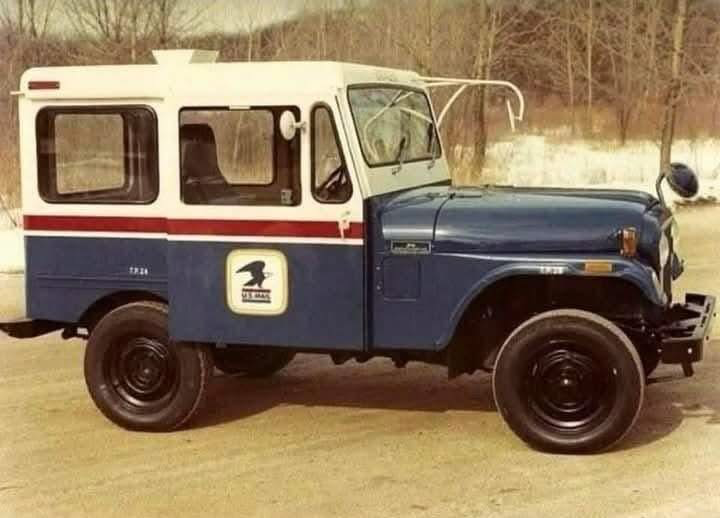
How a Wartime Legend Became a Postal Workhorse
When you think of Jeep, chances are your mind goes straight to muddy trails, rugged mountains, or heroic scenes from World War II. And rightly so—Jeep has long been a symbol of American resilience, earning its stripes on the battlefield as a vehicle that could go anywhere and do just about anything.
But there’s another side to Jeep’s legacy that’s rarely told. A quieter, humbler chapter—one that begins not on the front lines, but on neighborhood streets and rural backroads. This is the story of the Dispatcher Jeep, the unsung hero that helped keep America connected—one mailbox at a time.
From Battlefield to Backroad
In the years following World War II, Willys-Overland—the company behind the original military Jeeps—shifted its focus from war to work. Their first civilian offering, known as the CJ (short for Civilian Jeep), was pitched to farmers and ranchers as a sort of mechanical mule—a tractor in disguise, ready for daily labor.
But Willys had bigger ideas.
They saw the Jeep’s potential not just as a tool, but as a utility vehicle for all sorts of everyday jobs—including delivering mail.
Enter: The Dispatcher Jeep
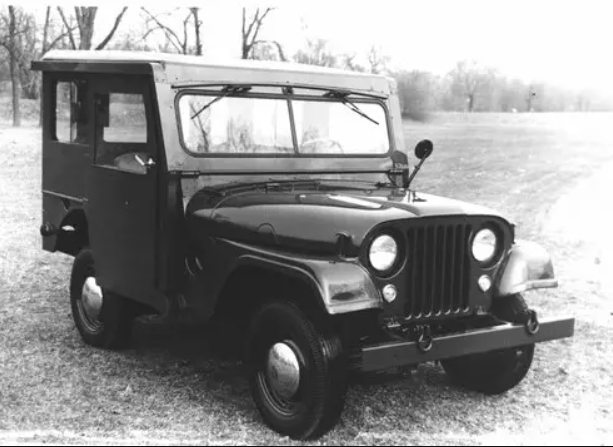
To make that vision a reality, Willys simplified the already-spartan CJ design. They removed the four-wheel drive system, swapped in a column-shift transmission, and added fully enclosed body options—including a panel van configuration. The folding windshield? Gone. What remained was a stripped-down, purpose-built machine: the Dispatcher Jeep, or DJ for short.
The first model, the DJ-3A, was based on the CJ-3A. And just like its military predecessor, the DJ was tough, dependable, and unbothered by rough terrain or bad weather. It was exactly what the U.S. Postal Service needed.
Built for the Route
The DJ line quickly proved itself on America’s mail routes. It was sturdy enough for unpaved roads and snowy driveways, yet simple enough to maintain. As the line evolved, new versions like the DJ-5 and DJ-6 were introduced, and even a batch of Scrambler models were custom-built for Alaska’s demanding conditions.
Many of these mail Jeeps came with right-hand drive, making it easier for postal workers to reach roadside mailboxes without leaving the driver’s seat—a clever adaptation that became a signature feature.
Later DJs received more upgrades tailored for mail delivery, including large sliding doors, wide mirrors, and extra lighting fixtures. One of the more noticeable changes was the introduction of a distinctive “bump-out” grille to accommodate AMC’s inline-six engines. Meanwhile, CJ models kept their classic look and simply extended the frame and fenders to fit the larger powerplant.
A Different Kind of Hero
The Dispatcher Jeep didn’t win wars or scale mountains. It didn’t make headlines or star in action movies. But for decades, it was a quiet champion of American life—faithfully delivering letters, checks, birthday cards, and holiday packages through rain, snow, and summer heat.
While the original military Jeep captured glory, the DJ earned something just as meaningful: trust.
It’s a reminder that not all heroes roar onto the scene. Some simply show up—day after day, with the mail in tow.
Road Trip Readiness
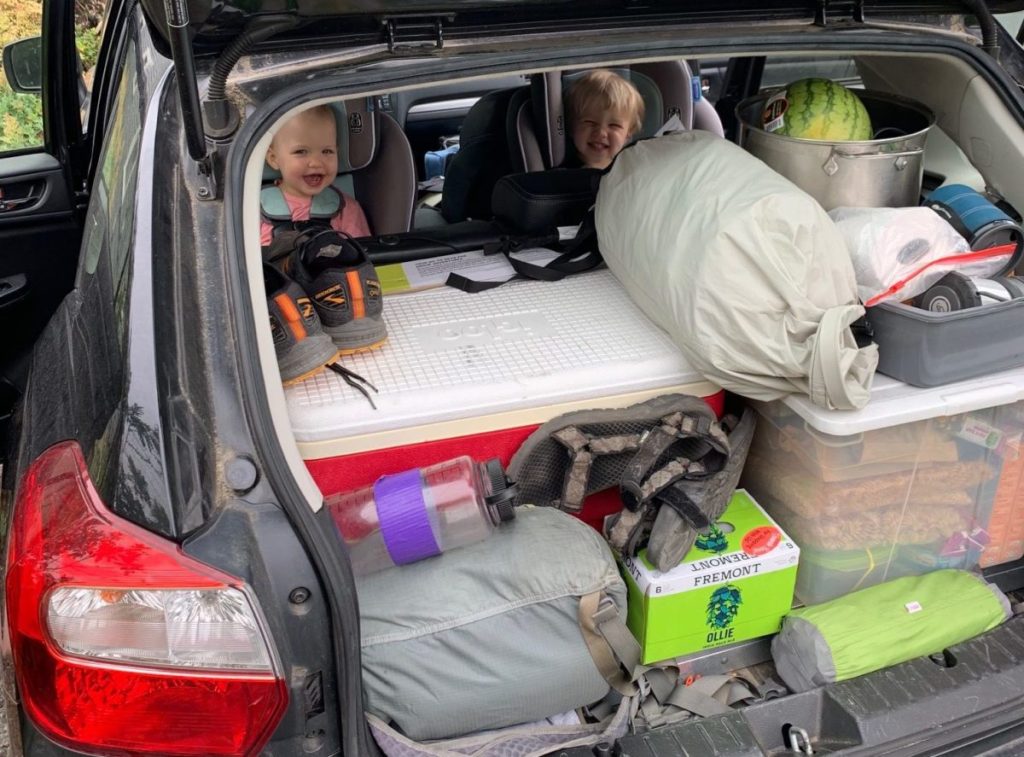
Spring is often the time of year when more people start hitting the road. From ball tournaments and band competitions to family reunions and vacations – it pays to be prepared. Here’s a few simple tips to help ensure this next trip goes smoothly:
Planning & Preparation
- Plan Your Route – Use a navigation app or GPS, but also have a physical map as a backup.
- Check Weather & Road Conditions – Be aware of any potential hazards or closures.
- Make Reservations – If staying in hotels or campgrounds, book in advance.
- Set a Budget – Factor in gas, food, lodging, and entertainment expenses.
- Download Offline Maps & Entertainment – In case of poor signal areas.
Vehicle Prep
- Get a Vehicle Inspection – Check tires, brakes, oil, fluids, battery, and lights.
- Pack an Emergency Kit – Include a spare tire, jack, jumper cables, flashlight, and first-aid kit.
- Ensure Your Insurance & Registration Are Up-to-Date – Keep copies in your vehicle.
- Bring Extra Car Keys – Store them separately in case you get locked out.
Packing Essentials
- Bring Snacks & Drinks – Saves money and time on food stops.
- Pack Comfortable Clothing – Dress in layers for changing temperatures.
- Have a Power Bank & Chargers – Keep devices charged for navigation and entertainment.
- Carry Cash & Cards – Some places may not accept cards.
- Pack Sunglasses & Sunscreen – Protect yourself from sun exposure.
Safety & Comfort
- Take Frequent Breaks – Avoid fatigue by stopping every 2-3 hours.
- Share Your Location with Someone – For safety reasons.
- Rotate Drivers If Possible – Helps prevent exhaustion.
- Stay Hydrated – Dehydration can lead to fatigue.
- Be Aware of Local Laws & Speed Limits – Especially in different states or countries.
Entertainment & Fun
- Make a Playlist or Download Podcasts – Keeps the trip enjoyable.
- Bring a Travel Journal or Camera – Capture memories.
- Plan Fun Stops Along the Way – Look for attractions, scenic spots, or unique restaurants.
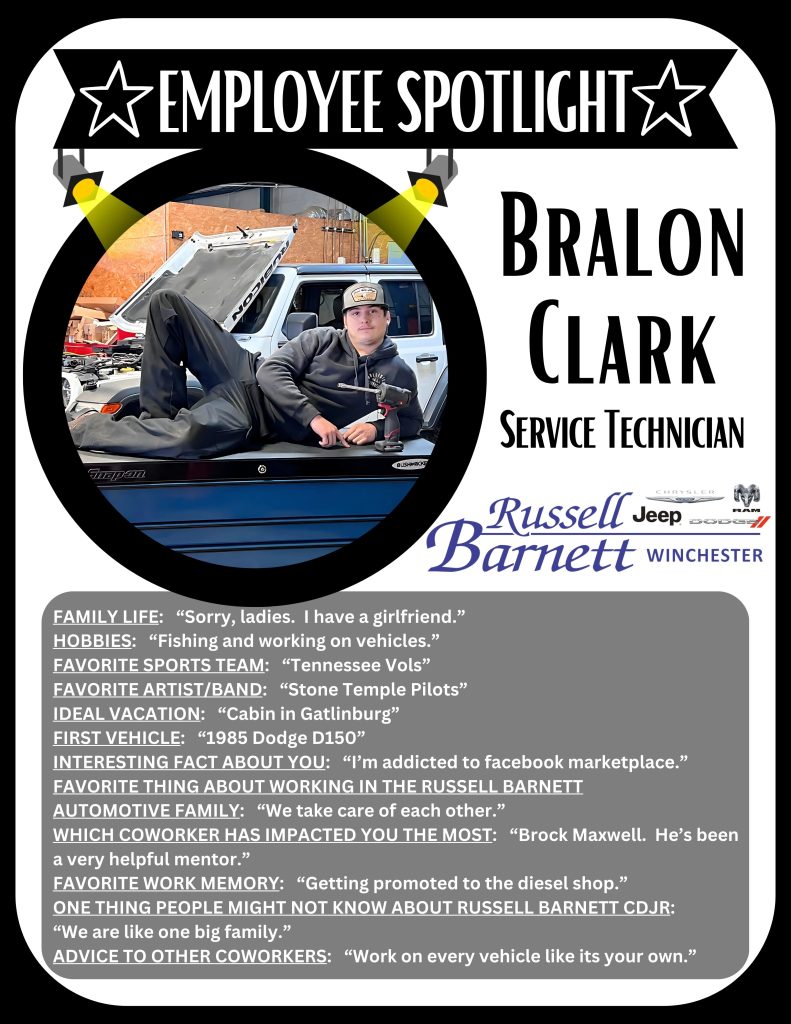
Employee Spotlight
Did You Know…? Rental Vehicles!

We have rental vehicles! Cars, SUV’s, vans, and even trucks! Visit https://www.russellbarnett.com/rentals.html for more info!
Improving Fuel Economy

Whether we’re trying to save money, save gas or save the environment, most of us Tullahoma & Winchester drivers have an interest in decreasing fuel consumption. We’ve all heard about ways to save money on gas in TN, but does it really add up to much? How much can we boost our fuel economy through preventive maintenance and more courteous driving?
The US government has a website that actually answers that question. Let’s look at some of the data and find out if any of these fuel-saving ideas are really worth the effort. We’ve all heard that a tune-up can improve gas mileage. It turns out that it can save us 4% at the pump. At $3.50 a gallon, that’s 14¢ per gallon in savings, and at $4.00 a gallon, that’s a 16¢ per gallon savings.
Other common repair items can also save you at the pump. For example, if your oxygen sensor is faulty, it’s not delivering the information to your engine’s computer that allows it to calculate the right fuel-to-air ratio. The result? The fuel doesn’t burn efficiently. Replacing that faulty sensor can save you 40% at the pump. That’s certainly a reason to improve your car care and have the automotive professionals at Russell Barnett Automotive Family inspect things once in a while.
A faulty oxygen sensor will activate the check engine light. So will a lot of other problems that are big fuel wasters. Finding out why your light is on and fixing the problem will also improve your fuel economy. Bring your car into Russell Barnett Automotive Family in Tullahoma & Winchester and we will take care of it for you.
What about tires? Tullahoma & Winchester drivers have all heard that keeping them inflated will improve our gas mileage. True? Yep. It’s a 3% savings for that one. And even small drops in tire pressure can start to add up, so a weekly tire check is in order.
Using the correct weight in motor oil is another way you can save at Tullahoma & Winchester area gas pumps. It adds up to a 2% savings.
What about that courteous driving? That doesn’t cost us anything and doesn’t require our Tullahoma & Winchester service center to implement anything. Is it worth the bother?
Again, the answer is yes. Sudden acceleration, such as charging away from stoplights, sudden stops and quick lane changes all add up in lowered fuel economy. Taking it easy when you drive on TN roads amounts to a 5% savings around town and a whopping 33% savings on the freeway. Is it worth your time to slow down? How much do you get paid?
Speeding is another way we ding ourselves at the gas pump. We’ve all heard that it’s okay to drive five miles over the speed limit, but that actually hurts our wallets. Eventually it could add up to more than a speeding ticket. An extra five miles over the speed limit ends up costing us 7% per gallon. Fifteen miles over? 23% Now there’s a reason to slow down.
Another thing Tullahoma & Winchester vehicle owners can do to improve that costs nothing is to toss the junk out of our trunks. In other words, clean out the car and stop hauling around non-essentials. Don’t treat your vehicle like a storage locker. Dumping one hundred pounds of extra weight adds up to a 2% savings at the pump.
So when you tell someone you were going somewhere anyway and they’re welcome to come along, that’s okay. But if someone tells you they need to come along and it’s no harm to you since you were going anyway—well, now you can tell them, “Sorry, dude, but you’re an extra fifteen cents a gallon!”
All joking aside, let’s all do ourselves a favor and fatten up our wallets by practicing good car care and better driving habits in TN.
Did You Know…?

You always get more when you shop with Russell Barnett! Let us take some worry away with a FREE 2-year roadside hazard plan when you buy your tires from us!
How Are Your Tires?

Maximizing the life of your vehicle’s tires not only saves money but also ensures safety and performance. Here are some key tips:
1. Maintain Proper Tire Pressure
Check tire pressure at least once a month and before long trips.
Inflate tires to the recommended PSI (found in the owner’s manual or on the driver’s side doorjamb).
Underinflation causes excessive wear on the edges, while overinflation wears out the center.
2. Rotate Tires Regularly
Rotate tires every 5,000 to 7,500 miles (or as recommended by your manufacturer).
This promotes even wear and extends tire lifespan.
3. Get Regular Wheel Alignments
Misaligned wheels cause uneven tread wear and reduce tire life.
Have an alignment check done if you notice pulling, vibrations, or uneven wear.
4. Balance Your Tires
Unbalanced tires can cause vibrations and premature tread wear.
Balance tires when installing new ones and if you notice shaking at certain speeds.
5. Drive Smoothly
Avoid sudden starts, stops, and hard turns, which accelerate wear.
Drive cautiously over potholes, curbs, and rough roads.
6. Check and Replace Worn Suspension Components
Worn shocks, struts, and ball joints can cause uneven tire wear.
Have your suspension inspected periodically.
7. Inspect Tires for Damage and Tread Depth
Look for cracks, bulges, cuts, or embedded objects.
Use the penny test: Insert a penny into the tread with Lincoln’s head down—if you see the top of his head, the tread is too worn.
8. Avoid Overloading Your Vehicle
Excess weight puts extra stress on the tires, leading to faster wear.
Follow the vehicle’s load capacity guidelines.
9. Store Tires Properly (If Not in Use)
Keep spare or seasonal tires in a cool, dry place, away from direct sunlight and chemicals.
Store them upright or stacked to prevent deformities.
10. Choose Quality Tires for Your Needs
Buy tires suited for your driving conditions (i.e. all-season, winter, performance).
Higher-quality tires may have better longevity and durability. Following these steps can help maximize your tires’ lifespan and ensure safer driving conditions. Safe travels!
Employee Spotlight

A Stitch In Time (Winter Battery Check)
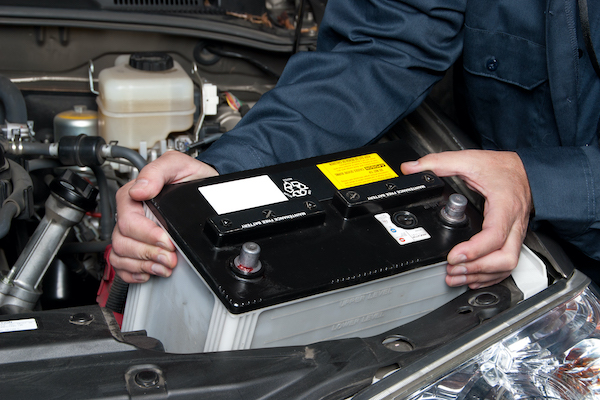
You probably have heard that expression, “A stitch in time saves nine.” In other words, if you fix an issue at its early stages, it will prevent a much more difficult problem later. That’s certainly the case with your vehicle, and here’s a true story to demonstrate it.
A driver noticed his vehicle was due for an oil change, so he took it in to his service facility early in the morning so he could wait while the work was performed. The technician routinely checks the battery on vehicles just before extreme weather is approaching (cold or hot), so with winter coming up, he hooked up the load tester (it measures voltage while a load is put on the battery). It showed the battery wasn’t holding a charge well.
The technician checked the manufacturing date on the battery, too (most batteries have a date stamped in code somewhere on them). The date showed it was five years old. While batteries can last more than five years, many technicians say you should expect to get anywhere from three to six years out of them, depending on what they go through.
So, this battery was getting a little long in the tooth, and it wasn’t holding a charge particularly well. But how much current was it being sent by the vehicle’s alternator? If it wasn’t getting enough, that might be a factor. A test of the charging system showed the alternator was putting out the correct amount of power. The technician recommended replacing the battery, and the driver agreed.
That was the stitch in time. Had the technician not checked the battery, that driver likely would have been stranded the next time he tried to start his vehicle on a very cold day. What originally was supposed to be just an oil change led to a technician’s sharp diagnosis and a little preventative maintenance for one fortunate driver. Sometimes timing is everything.
Connect with us


